The Planning Trap: Why Organizing Your Day Feels Productive (But Isn’t)

Taking your time to plan something out feels like real progress, and it’s easy to get stuck in that sense of order that the plan creates without actually carrying it out. When you have your day mapped out neatly on your to-do list with color-coded blocks, and you can see how you’re supposed to progress from a glance, you get a sense of clarity that can reduce your anxiety and make you feel like you’re halfway there. Many people, though, get stuck here, caught up in the preparation, but hardly ever follow their own plan. Before you know it, you’re reorganizing, shifting things around and promising yourself to follow up.
Planning and doing are separate things; one is easy and always within your control, the latter is tougher. Doing what you planned requires you to commit, gather the energy to actually start, and sit in the discomfort of imperfect progress. You’ll need to push your brain to resist easier alternatives, ignore distractions and pull your focus until it's done.
In this article, we’ll help you understand why preparation feels so productive, how it can quietly transition to avoidance and what you can do to un-stuck yourself.
Why Planning Feels Productive
There's a good reason you can spend 45 minutes organizing a task list and walk away feeling like you accomplished something. You kind of did, but it’s not the thing that you needed to do.
Planning works on your mind by reducing the amount of anxiety you feel about the actual task, because when you have a visible structure with tasks in place and priorities ranked, your brain registers that as meaningful activity and rewards you with the feel-good chemical dopamine. This is the same chemical that’s tied to task completion, even when no real work happens.
Your brain also doses you with it even when you’re just imagining the work going well or picturing the finished project. This means by the time you're done organizing, part of your brain thinks the job is pretty much underway.
Whenever you get stuck, remember that it’s not really your fault. Our brains naturally move toward activities that feel easy, especially when higher-friction ones feel ambiguous or when there’s a lot riding on the outcome. Planning is easy and in your control, and so it can quietly become a substitute for starting, and it's convincing enough that you don't always notice when it's happening.
When Planning Becomes Procrastination
If you want to know when your planning starts to border on procrastination, just be on the lookout for the moment it starts serving your comfort rather than your work. It looks like:
Rewriting Lists Instead of Starting
Your task lists start becoming more and more elaborate through constant changing, like rephrasing, reordering, and adding details. Every time you refine it, you feel like you’ve made genuine progress, yet the first item remains undone.
Rearranging Priorities Instead of Acting
The first item on your list is now third, because two other things feel more urgent, or more manageable, or slightly less anxiety-inducing. You keep reprioritizing and shifting the order, but at the end of it all, absolutely nothing gets done. This is often a sign that the top task is the one that you're most resistant to, but moving it down the list doesn't reduce its urgency. It just buys you time before you have to face it.
Downloading New Productivity Apps
At this point, you feel like the tool you have is not really doing it for you, and you embark on a search for better productivity tools. You try a new focus app or look up another time blocking method. Each new system promises clarity and control, and setting it up feels productive, but every time you switch, all you do is reset the momentum.
Time Blocking Without Follow-Through
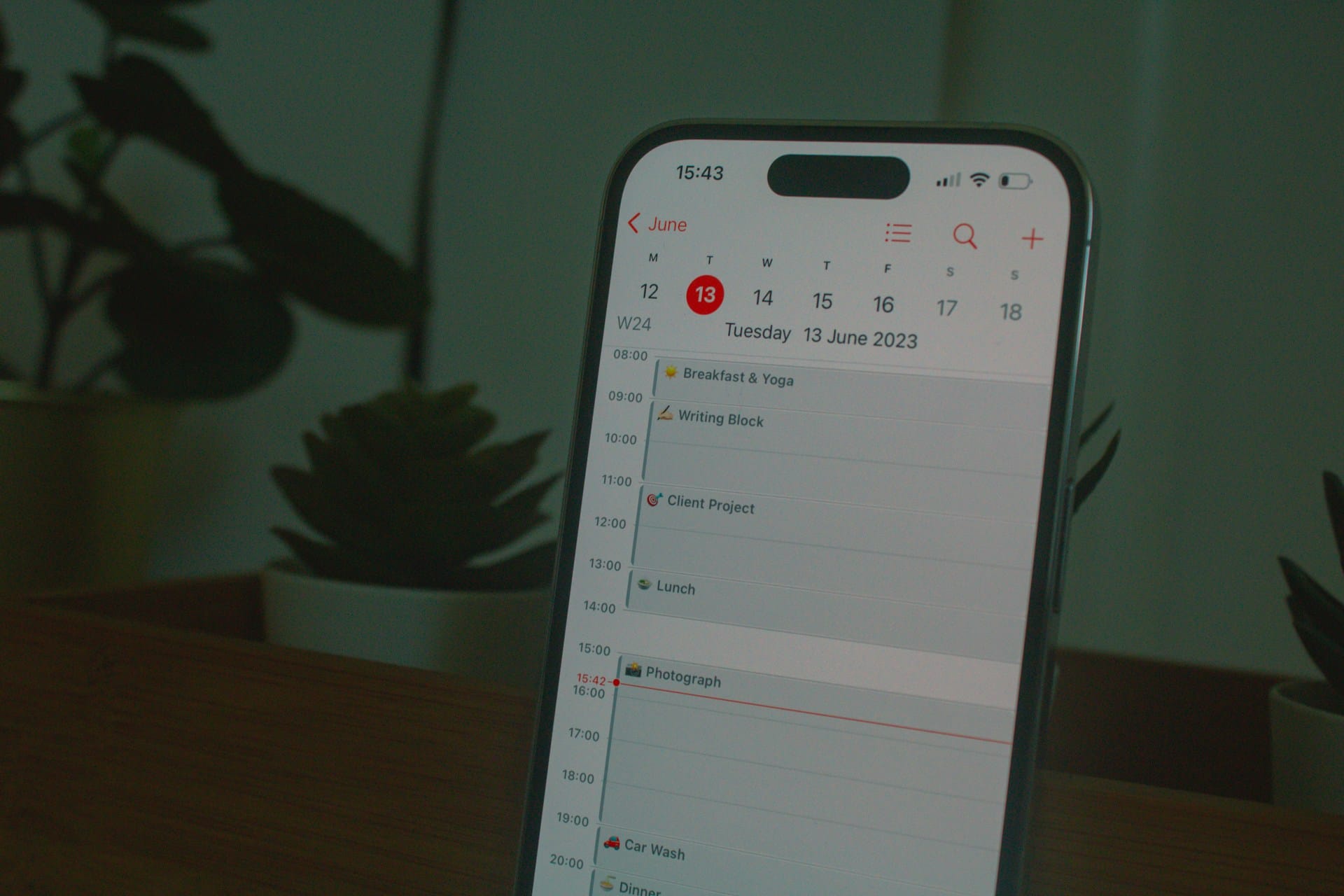
You fill your calendar neatly with blocks, add buffers, and carefully plan the transitions. The schedule then launches with optimism, then quickly crumbles under real demands and slowly but surely, the re-planning begins. Time blocking is actually a legit strategy, but only when you treat the blocks as commitments rather than suggestions.
The Planning vs Execution Gap
Planning and doing are two very different processes and don’t follow each other as easily as everyone would wish.
Planning is thinking about the work and happens almost entirely in your head. You're just arranging information, making decisions about what comes when, and imagining the outcomes. It requires some degree of concentration, but it doesn't need you to produce anything or tolerate any meaningful discomfort. You can just stop and simply restart without losing any ground or dealing with any consequences.
Execution, on the other hand, is not just thinking. It means opening the document when you don't know exactly what you'll write or sending the email before you've found the perfect wording. You’ll have to start the task even if you don’t feel ready. Doing demands that you tolerate uncertainty in real time, and your brain, which is wired to minimize threat and conserve energy, will resist that for sure if given literally any other (easier) alternative.
Most productivity tools only cater to the preparation. They come packed with templates for lists, drag-and-drop calendars, and visual polish that only serve to reinforce the planning high. Very few help you address the behavioral leap that you need to inhabit those plans when you need to deal with real interruptions.
Why This Trap Hits Harder with ADHD and Chronic Procrastination
For most people, over-planning is an occasional bad habit, but for people with ADHD or chronic procrastination patterns, it can become the primary way they spend the day and not by accident, but because the brain is working exactly as it's wired to.
Executive dysfunction turns planning into a refuge. The brain craves order when it's overwhelmed, so organizing focuses your energy on systems rather than tasks. You start to see calendars expand, and the lists keep multiplying, but there’s no real initiation. This is why someone with ADHD can have a perfectly clear and well-organized task list and still sit frozen in front of it, feeling paralyzed and unable to start. They struggle with:
- Feeling overwhelmed because everything feels equally urgent or equally impossible
- Hyperfocus that can easily lock onto planning itself. ADHD brains don't struggle to focus on everything; they struggle to regulate where focus goes.
What Actually Moves Work Forward
The goal isn't to stop planning. Planning is good, as it actually does help you reduce the anxiety of facing the actual start. You should plan, but try to stop letting planning substitute for the moment of beginning.
- Define the first physical action: Action starts with naming the first physical step. An entry like"Work on report" is a bit vague, but "open document and type one sentence" launches momentum without overthinking.
- Set start times, not just task lists: A list only tells you what to do. A start time tells you when to stop preparing and begin, which helps to remove the ongoing negotiation of “when should I start this?”
- Reduce midday replanning: Try to plan once in the morning, then close the plan. What's on the list is what you're working from. Resistance to a specific task is worth noticing, but the response to that resistance should not be rearranging the schedule. It should be starting anyway, even imperfectly.
- Use a system that supports your action: Systems that automate boundaries will almost always outperform solo effort. They slot in reasonable transitions, block distractions by default, and cut down on the number of decisions to help keep your behavior aligned with the initial plan.
The Missing Piece Most Productivity Tools Skip
While the majority of productivity tools out there only help you plan out your day on paper, Mom Clock helps you make that day actually happen. It treats your schedule as something to be followed, not endlessly reworked.
Instead of relying on constant self-control, Mom Clock uses enforced time blocks and clear start/stop signals to move you from “I should start” to “I’ve already started.” Rather than giving you more ways to organize your tasks, it's designed to reduce the space between your plan and your follow-through. You get to work with scheduled blocks that become enforced commitments. The decision of what to do next is already made, so there's less room to drift back into reorganizing mode because the structure doesn't leave that door open.
Frequently Asked Questions
Is planning a form of procrastination?
Planning turns into procrastination when it starts to loop endlessly without actually triggering any real action. The brain registers order as progress, which in turn makes it easier to delay the harder shift to execution.
Why do productivity apps stop working?
Most productivity apps are designed for capturing and organizing tasks, not executing them. They solve the planning side of the problem well, but if the gap in your day is between knowing what to do and actually doing it, a better-organized app won't close it.
Why do I keep reorganizing instead of working?
Because reorganizing gives you quick dopamine and control without you having to deal with any risk. Actual work will expose you to failure or interruption, so the brain defaults to safe tweaks.
Does time blocking actually work?
Yes, but only when the blocks are treated as commitments rather than a rough outline. Time blocking fails when it becomes another planning activity that you design and redesign instead of actually following. The schedule itself isn't the system; showing up to it is.
How do I stop over-planning?
Try to limit the planning process to just one session per day. To start, name the first physical action that you can take for each task, then work with tools that will lock the schedule down and start those time blocks without needing your permission.