Why You’re Only Productive Under Pressure

If you get a rush of adrenaline and a sudden burst of energy whenever there’s a looming deadline, you’re one of the people who would probably put ‘Work well under pressure’ on your resume. In fact, this happens to many people; you do almost nothing for the 6 out of 7 days before the deadline, then get suddenly focused and productive in the last couple of hours. The worst (or best) part of it is that the work often comes out so good that it easily becomes a pattern.
While you may not find anything wrong with it, this mentality proves to be a little unhealthy when you take a closer look at what actually happens beyond just getting the work done. In this post, we’ll explain why pressure seems to work so well, what it quietly costs you, and how to build that same sharp focus without needing a last-minute emergency.
Why Pressure "Works" for You
As it turns out, consequence can be a very motivating factor for the human brain, and the closer it is, the more the push to avoid it. When a deadline gets close enough to feel real, something genuinely changes in your brain:
- There’s no time to weigh and make decisions. When you have time, there is a constant renegotiation on what to work on and when to do it. But when the deadline is just around the corner, there’s simply no time to let anything sit open; you just do it without resulting in any decision fatigue.
- When there’s no urgency, your brain can just dance around anything that doesn’t seem interesting or engaging. When the deadline starts to tick, though, you’re shot up with adrenaline, and whatever felt optional a while ago is suddenly the only thing that needs your attention.
- Real pressure also filters out anything insignificant so that distractions and low-priority tasks don’t compete for your attention. The urgency of the situation makes the path forward so clear because you simply don’t have the time to waste on anything else.
If you’re still wondering what the issue is here, it’s not that you work well under pressure; it’s that you ONLY work well under pressure.
The Hidden Cost of Deadline-Driven Productivity?
Anyone who’s worked under pressure can tell you just how good it feels to get the task done. It’s a wave of relief and a rush of pride in knowing that you put yourself through this ‘test’ and managed to not only pull it off, but do so well. This rewarding sense of accomplishment is what tempts people to wait again until the last minute.
What you don’t see, however, is the long-term picture where you’re essentially in a stress cycle. The six days before the last were not just passed obliviously while you were enjoying the free time, relaxing and getting some rest. You were probably (even just lowkey) anxious, unsettled and continuously trying to figure out when the best time to start is. You were harbouring some guilt and had to deal with an unresolved ‘I really need to get started on that’ feeling that slowly kept accumulating until the last day.
This also matters for the work that you eventually managed to produce. It may feel like you did a splendid job, but a rushed job that was done in a fraction of its allocated time is rarely your best. During a deadline, you don’t get to make a draft, take time on each section, take another look later when you’re re-energized or even reconsider and redo. It’s all about submitting and moving on. It’s like showing up to an exam in the last couple of minutes, quickly writing and submitting it, then later keep wondering if you got anything wrong and obsessing over what you could have done better.
When you keep putting yourself through this, you’ll notice that the anxiety before the deadline gets worse and the recovery time between projects takes longer. You’re stuck in a stress cycle, and what should be enjoyable becomes something you just have to survive. You realize that you’re not thriving on pressure; you’re just productive because it takes away friction.
What You Actually Need
What does a deadline do for you? Pressure works because the urgency of the situation removes the number of choices to be made, forces you to start, and makes things clearer. You don’t need more urgency; you need to find a way to manage the ambiguity that exists when there’s no looming deadline.
You can start by deciding what to do and when to do it in advance so that you’re not always weighing and making decisions as you go. When you’re struggling with low-energy moments, handle the tasks that don’t demand too much focus and work on the heavier ones when you feel more energized. If you’re having a hard time starting, shrink the task at hand into something so small that it’s ridiculous not to work on it. Try to create clear starting points and not vague descriptions so that your brain doesn’t start dancing around it. This will help you avoid decision fatigue and putting off the work until 'later' when you think you'll have the energy to tackle the whole thing.
If you have a hard time sticking to your plan because of distractions or low motivation, look into tools that enforce your plan in the form of time blocks with non-negotiable starting times, distraction blockers and reasonable buffers that allow you to get enough rest between tasks.
You don’t need more deadlines; you just need a flexible structure that helps you enforce your plan well before the last minute.
Why You Feel "Unmotivated" Without Pressure
When you can’t start a task or get anything done without a deadline being held over your head, it’s not that you’re unmotivated. Motivation is a response to conditions, not a character trait that you have or don’t have.
As mentioned earlier, the pressure created by deadlines takes away any choices or renegotiation and makes what needs to be done very clear. When it’s absent, the ambiguity and lack of urgency create the exact conditions that make motivation hard to maintain. This is because you have options on what to do and when to do it, there’s no clear starting point or way to go about it, and there’s no immediate consequences if you simply don’t do anything. There’s no momentum, and you could just wait another day and do other things that have more immediate rewards. This, according to your brain, is very rational even if you know otherwise.
Feeling unmotivated when you’re not under pressure is not the root problem; it's a sign that you lack a good structure that guides your effort and doesn’t let you work based purely on how you feel.
Build a System That Doesn't Depend on Panic
Now that you understand that productivity that’s driven by pressure isn’t sustainable, the question is probably ‘then what is?’ When the deadlines dictate when you start, set the pace and determine the outcome, they take away control and force you to deal with:
- Inconsistent output because you do great work when the deadline is around and almost nothing when it's not
- Stress and anxiety that start way before the deadline
- Recovery days after the project to compensate for the energy you suddenly used
- A growing sense that you can only trust yourself under pressure
Structured productivity, on the other hand, takes away this randomness with a flexible system that lets you decide in advance. It helps you create a reasonable picture of what it looks like to have the job done and leaves no room to keep renegotiating.
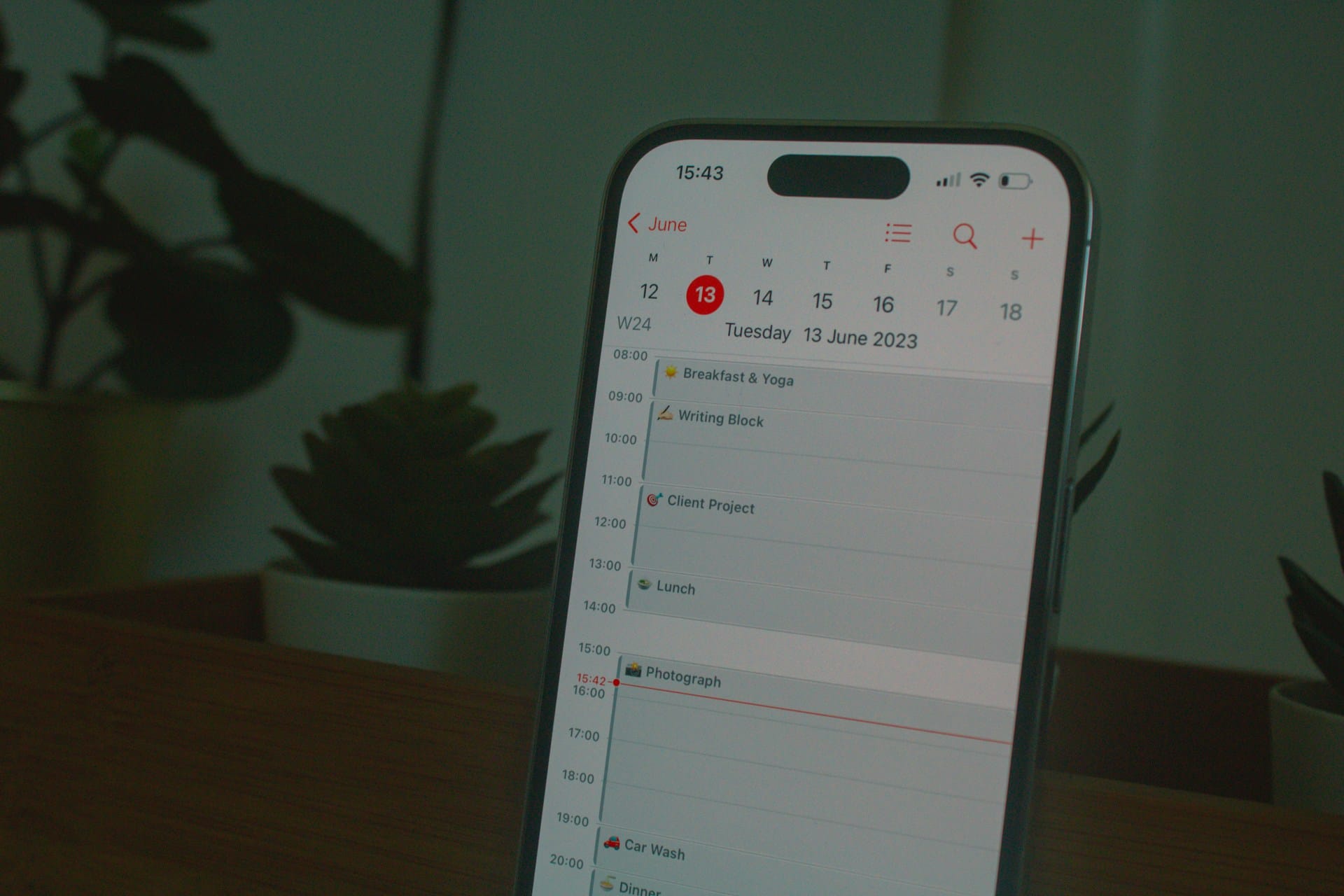
Mom Clock can help you clear things up before urgency creeps in so that you plan and work on your tasks without panicking. The app has flexible time blocks that you base on pre-made decisions, and you work with visible schedules that show how your progress is stacking up, so you can gradually build momentum as the deadline approaches.
Remember, real productivity isn't about intensity. It's about removing the conditions that make delaying things feel easier and safer than starting.
Frequently Asked Questions
Why am I only productive under pressure?
Because pressure takes away any options, makes things clearer and brings the consequences closer. Without it, things feel optional, unclear, and it's easy to put off tasks to another day in favor of more interesting things that have faster rewards.
Is working better under pressure a good thing?
Yes, if you’re looking at the short term. Over time, though, all the stress and random bursts of energy compound to burnout, and you start needing longer recovery times. Your results become inconsistent, and you become basically unable to do anything that doesn't have immediate rewards unless it has a deadline.
How can I stop relying on deadlines to get things done
You’ll need to work with a system or structure that helps you decide what to do and when, once, then helps you follow the plan with non-negotiable time blocks while minimising distractions and giving you enough breathing space between tasks. Break down the task into smaller bits that have clear starting points, and match each subtask to your energy levels.
Does procrastination mean I'm lazy?
No, it could mean that you’re overwhelmed with unclear tasks that have no defined starts or stops. It could also mean that you have too many options and no structure to guide your effort, and pushing things to later dates has no immediate consequences. You don’t need to ‘push harder’, you just need a reliable system.
Can time blocking help if I only work at the last minute?
Yes. Time blocks help you get some clarity and make decisions that can help you pick up momentum as you work on your tasks without waiting for the panic of a looming deadline to enforce them.