What Causes Low Productivity?
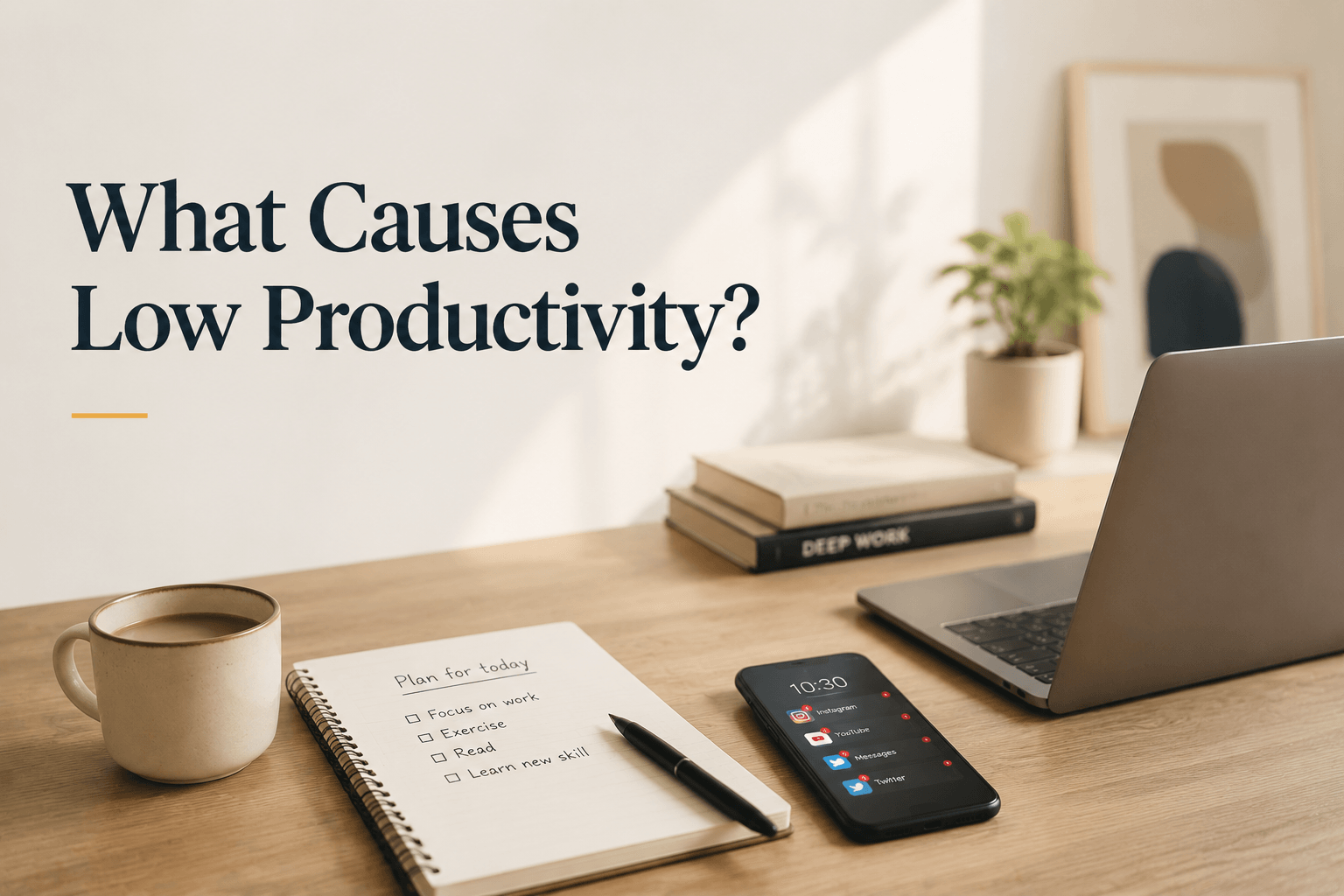
Many people assume low productivity comes from one simple problem: a lack of discipline.
They think they are procrastinating because they are lazy, unmotivated, or not trying hard enough.
But that explanation is often incomplete.
Most people who struggle with productivity already know what they should be doing. They know they should spend less time scrolling, focus on important work, exercise regularly, or make progress toward their goals.
The real challenge is not knowledge.
It is consistency.
Understanding what causes low productivity requires looking beyond simple time management. Productivity problems are often connected to habits, environment, attention, energy levels, and the systems we create around ourselves.
Here are some of the most common reasons people struggle to stay productive — and what you can do about them.
1. Digital Distractions Are Destroying Your Ability to Focus
One of the biggest causes of low productivity today is constant interruption.
A typical day might look like this:
You sit down to finish an important project. You open your laptop, check your messages, reply to a few notifications, browse social media for "just a minute," and suddenly 45 minutes have disappeared.
The problem is not that you lack ambition.
The problem is that your attention is being pulled in too many directions.
Modern apps are designed to keep people engaged. Notifications, endless feeds, and instant updates create a habit of checking instead of focusing.
Over time, this makes deep concentration feel uncomfortable. Even a small amount of boredom can trigger the urge to reach for your phone.
To improve focus, start by changing your environment:
- Turn off unnecessary notifications
- Keep your phone away during important work
- Create specific periods for focused tasks
- Avoid switching between multiple activities constantly
Focus is not only a personal skill. It is also something you protect through your surroundings.
2. You Are Busy, But Not Working on What Matters
Another common reason behind low productivity is confusing activity with progress.
Many people have full schedules but still feel like they achieved nothing meaningful at the end of the day.
Why?
Because being busy and being productive are not the same thing.
Answering emails, organizing files, checking messages, and attending meetings can fill your entire day. But they may not move you closer to your most important goals.
For example, a writer might spend hours researching new writing tools, organizing notes, and watching tutorials — while avoiding the actual writing.
A business owner might spend the whole day responding to small requests while delaying the strategic work that could grow the company.
A useful question to ask every morning is:
"What's the one thing I can do today that will create meaningful progress?"
Prioritizing fewer important actions often creates better results than trying to complete dozens of smaller tasks.
3. Your Goals Are Too Vague
Many productivity problems begin with unclear goals.
People often create goals that sound inspiring but are difficult to act on.
Examples:
"I want to become healthier."
"I want to learn a new skill."
"I want to be more successful."
The problem is that your brain cannot easily turn these ideas into daily actions.
A better approach is to connect goals with specific behaviors.
Instead of:
"I want to exercise more."
Try:
"I will walk for 20 minutes after lunch every weekday."
Instead of:
"I want to write more."
Try:
"I will write 500 words every morning before checking social media."
Big changes are usually built through small repeated actions.
The question is not only "What do I want to achieve?"
It is also:
"What kind of person do I need to become to achieve it?"
4. You Depend Too Much on Motivation
Many people start with strong motivation.
A new year begins. A new project starts. A new goal feels exciting.
You decide:
"This time I will finally change."
But motivation naturally goes up and down.
A few weeks later, reality arrives.
You are tired. You are busy. You have unexpected problems.
This is where many people fail because their entire system depends on feeling motivated.
Successful habits are not built on motivation alone. They are built on routines that continue even when motivation disappears.
For example, someone who exercises consistently usually does not wake up every day feeling excited about working out.
They simply created a routine where exercise became part of who they are.
Discipline is not forcing yourself through endless suffering.
It is creating structures that make the right actions easier to repeat.
5. Your Environment Makes Good Habits Harder
Your environment quietly influences your behavior every day.
A student who keeps their gaming console next to their study desk will face more temptation.
A remote worker who keeps social media open in another browser tab will find distractions easier than focused work.
A creator who checks notifications immediately after waking up may spend their best mental energy consuming content instead of creating.
Instead of relying only on willpower, design your environment.
Make good behaviors easier:
- Prepare your workspace before starting
- Keep useful tools visible
- Remove unnecessary distractions
- Create clear boundaries between work and rest
The best systems reduce the amount of self-control you need.
6. You Have No System for Keeping Promises to Yourself
One overlooked cause of low productivity is the gap between intention and action.
Many people make promises to themselves:
"I will start tomorrow."
"I will spend less time on my phone."
"I will finally work on that important project."
The problem is not making promises.
The problem is having no system to help you keep them.
While traditional productivity tools like calendars and task managers help organize responsibilities, some people benefit from a more supportive approach — a discipline companion like Mom Clock that focuses on helping people build routines and stay consistent with the commitments they make to themselves.
The important idea is that productivity is not only about managing tasks.
It is also about building trust with yourself.
Every time you follow through on a small commitment, you reinforce the identity of someone who does what they say they will do.
7. You Are Trying to Change Too Many Things at Once
Another reason people struggle with productivity is trying to completely rebuild their lives overnight.
They decide they will:
- Wake up early
- Exercise daily
- Read more books
- Learn a new language
- Start a business
- Quit social media
The ambition is positive, but the approach creates too much pressure.
When everything becomes a priority, nothing receives enough attention.
A better strategy is focusing on one meaningful change first.
Build confidence through small wins.
For example:
A person who wants to become healthier might begin with a daily walk before creating a complicated fitness routine.
A person who wants to become more productive might start with one focused work session each morning.
Consistency creates momentum.
8. You Spend Too Much Time Planning Instead of Doing
Planning feels productive because it creates a sense of progress.
You can spend hours creating the perfect schedule, researching productivity methods, or trying new apps.
But eventually, planning has to turn into action.
A simple imperfect plan that you actually follow is more valuable than a perfect system you never use.
The goal of productivity systems is not to create beautiful plans.
The goal is to help you consistently take meaningful action.
9. You Ignore Your Energy Levels
Sometimes low productivity is not caused by poor discipline.
Sometimes you are simply exhausted.
Constant stress, poor sleep, and mental overload make it harder to focus and make decisions.
A sustainable approach to productivity includes recovery.
Rest is not the opposite of productivity.
It supports productivity.
People often think discipline means pushing harder, but true discipline also means understanding your limits and creating a lifestyle you can maintain.
Fixing Low Productivity Starts With Understanding Yourself
Low productivity is rarely caused by one single problem.
It is usually the result of multiple factors:
- Too many distractions
- Weak routines
- Unclear goals
- Poor systems
- Lack of consistency
- An environment that encourages the wrong behaviors
The solution is not finding another productivity trick or downloading another task manager.
The real improvement comes from building a stronger relationship with your own commitments.
Start small.
Choose one promise you can keep today.
Then keep it again tomorrow.
Over time, those small moments of consistency become evidence that you are becoming the person you want to be.
Productivity is not about doing more things.
It is about becoming someone who can reliably do the things that matter.